Showing posts with label getting started. Show all posts

Monday, June 15, 2009

getting started - organizing coupons

You know how sometimes you make a bigger deal of something than it really is? Maybe that's just me. Anyway, I've had writer's block lately. I'm just going to stream-of-consciousness this - please let me know if you have any questions or if it doesn't make sense!

Let's start with organizing. The hardest part about couponing, for me, is organizing my coupons. I've used several different methods and I've basically settled on this system:

1. Browse through insert. Clip coupons for products I know we use and for items that I suspect will be moneymakers.

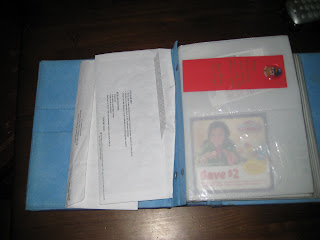
2. File those coupons in my binder (actually a photo album). Here it is. The smaller one is where I keep my ECBs and coupons I'm planning on using at CVS.


3. Write the date of the insert on the front cover and file it in a magazine file. My magazine files have lived several different places. Currently, they reside in a laundry basket, so I can haul it out whenever I need it and hide it, when I don't need it. Don't let this scare you:


Now, that's in a perfect world. The reality is that I usually make my lists by scanning the ad previews on hotcouponworld and the "best of" weekly posts on the blogs over in my sidebar. In that case, I just clip as I need them. As I've mentioned before, I file them in envelopes with my list on the outside. My envelopes are usually tucked inside the front cover of my binder:


That covers inserts, but there are lots of other kinds of coupons - tearpads, booklets, blinkies, home mailers, internet printables, and so on. This is where I still struggle. I'm great at locating them - not so great at organizing them. As a result, I usually have a box like this:


This works for me for now as long as I put anything coupon related into it. At least I know right where to look for missing coupons or I-thought-I-had-a-blah-blah-blah coupons.

It is very easy to drown in a sea of papers when you start couponing. The secret to big savings is to have multiples of the same coupons - that means a. lot. of. paper. Try to find a system that works for you. If it's not working, change it.

I do not clip every single coupon and I honestly don't think you should either. It takes so much time and unless you're planning on regularly going up and down every single aisle of every store you shop - it will be time wasted.

Here's what I try to clip for sure:
  • organics
  • high dollar coupons for toothpaste, shampoo, make-up, etc. These are the moneymakers.
  • products that I'm ok to get conventional - rice, pasta, frozen veggies, cheese, eggs
  • diapers and wipes
Here's what I usually have waiting in designated envelopes:
  • Kroger - home mailers that I know I'll use, catalinas that I think I'll use, Eggland's best eggs - these are usually cheapest at Kroger for me and I know where to find the coupon if I need it at another store
  • Tom Thumb - catalinas that I think I'll use, ad coupons that I've clipped
  • Target, Walgreens, CVS - I try to clip and add coupons for upcoming sales when I can - it helps me to remember to watch for the sales.
oops - K's up from her nap - that'll have to do for now. questions? comments? is anybody out there?

Saturday, June 6, 2009

getting started - the very beginning

Kim said: I have come to a crisis in my life with spending. We are just not making ends meet around here. I would love to know just exactly what you did when you first started couponing. I am a bit overwhelmed with everything and I have been reading your blog trying to figure things out but if you could give me some pointers on where to get started and what to do I would greatly appreciate it.


Kim is a mom in much the same situation I was when I started couponing. She's a SAHM who didn't necessarily plan on being one ahead of time. For me, the only place in the budget that had any wiggle room was on groceries, so slashing that amount was a necessity.

Since I stay home, I feel like my job is to make our money go as far as it can go. Our kids know that Daddy makes the money and Mommy makes it stretch 'til it screams.

If you're just getting started couponing, here are some things to remember:
  • Nobody is watching you. Don't stress out about "getting it right." Saving any money at all over what you spend now is success.
  • Don't feel like you have to turn into a couponing queen overnight. Just take things one step at a time.
  • Don't feel like you have to run out and start a stockpile immediately. Gradually build to that point. (More on stockpiling later)

Couponing is really just a part of saving money on groceries. It's another way to stretch your dollars. So, let's start with your grocery budget and ways that anyone can save at anytime. We'll tackle the actual couponing part in a bit.


1. Pick your number. Sit down with your spouse and make a budget. If you're in a place where you're running out of money before you run out of month, this won't be much fun. However, once you have it all down on paper, you have a plan. That plan is power - really.

When we started budgeting, I literally had to budget paycheck to paycheck. I may have had $250 to spend on groceries, but I certainly didn't have all of it at the beginning of the month.

Once you know how much you have to spend on groceries, decide if you want to break that down into weekly or bi-weekly amounts.

If you already budget and already know about how much you spend on groceries, decide how much lower you want that amount to be.

If you have the wiggle room - pick an amount that requires you to stretch a little, but not too much. Then gradually whittle it down.

We didn't have the wiggle room when I started. $250 a month was what I had - period. I had to work to learn how to make that amount buy the types of foods I wanted to feed my family. This may be where you are - and that's ok.

2. Shop your home. Before you hit the store, check your fridge and your pantry. See what meals you can put together from what you already have. Start a list of ingredients you might need to make other meals featuring what you already have.

Check your non-grocery items, too. If you only have $40 a week, you don't want to be in the store trying to remember if you need toilet paper or toothpaste. Make a list of things you'll absolutely need before your next shopping trip.

3. Grab the sales ads. If you don't get copies in the paper or in your mail, check the ads online. Plan your meals around what's on sale. Seasonal produce will be on sale. Some meats will be loss leaders. There may be great store coupons printed in the ad.

I'm not a weekly meal planner, but if you're just getting started - you may want to plan weekly. I usually plan our meals a day or two at a time based on what we have in the house. When you're making your meal plans, try to plan for a couple of meatless meals and/or meals where meat is just an ingredient and not the star of the show. Breakfast for dinner is also an option for a cheap weeknight meal.

When I peruse the ads, I'm usually looking for organic produce deals, meat prices at Whole Foods, and things for the kids to snack on. Snacks around here are usually fresh fruit or veggies, Cheerios, cheese cubes (that I cube myself), or trail mix type things that I make from nuts, raisins, etc.

If you have coupons, this is when you want to pay attention to what is on sale that you also have a coupon for. If the combination of the sale and coupon is a great price, try to add as many as you can to your list after you account for the things you need for meals while remaining within your budget.

Remember step #1 and keep your number in mind as you make your list. If your budget is $40 - then your budget is $40. I try to make my list with a little bit of extra room for marked down produce or dairy. So, you might try making a list that represents $30-$35 to leave yourself a little room for unexpected markdowns, or extra stockpiling. You can always roll money you don't spend to the next week, or save a little in case you need milk in the middle of the week.

I try to make my list in the order I shop the store. It keeps me from back-tracking and helps me to avoid extra spending. I use an envelope and write my list on the outside of it. I put any coupons I'm using in order inside of it. If I have any E-coupons loaded on my shopping card, I also have a piece of paper with those listed inside of my envelope. As I'm doing my shopping, I keep my eyes peeled for coupons - blinkies (the one's in the little red boxes with blinking lights), tearpads, and booklets. If I find any, I put them in the back of my envelope and sort them when I get home.

4. Hit the stores. If you're just getting started with shopping this way (with a budget, coupons, etc) then if at all possible, shop alone the first couple of trips. Kids and spouses have a way of increasing grocery spending if they're along for the ride. However, once you feel comfortable with this way of shopping, I think you should try to take kids along. Learning how to stick with a budget, looking for the best value for your money, and just plain old math are all valuable lessons for your kids to learn while they're young.

Go to the store with your list, your coupons, and a calculator. Really, a calculator. You'll feel like a nerd, but you'll be the nerd in control of her money. Take your budgeted amount in cash. Leave your debit card and your credit cards at home. Remember - you only have your number. If it's $40 - you don't want to realize you're over when the cashier tells you the total. If you only have your budgeted cash with you, you'll be forced to take something off. Use your calculator and know your total before you even get to the check-out.

In the store, I try to mainly shop the outer edges. Produce, meat, dairy - fresh, whole foods. These are generally where you get the most bang for your buck in quality nutritionally dense foods for your family. We make most of our food from scratch. That may or not be an option for you depending on your time constraints, but when possible try it for definite money saving.

I don't go up and down the aisles. I only go down the aisles for items that are on my list. If you've planned before you hit the store, you don't have to worry about forgetting something you might need.

Before you check-out, take a sec to look over your basket and get your coupons in order. I usually do one more quick total check, too.

After you check-out, look over your receipt before you leave the store. Make sure that produce prices and sale prices rang up correctly. Make sure that any promos (buy x amount to get y amount off of your total) have come off correctly. If you keep track of what your total should be before checking out, you'll usually know if there's an issue on your receipt. If anything is wrong, go to the service desk and have them fix it. Many stores have a ring right guarantee - if something rings up incorrectly, you get it free.

Once you get home - use what you bought. Use the produce that spoils more quickly first, incorporate leftovers into your next few meals, and freeze things for later.


I hope some of that helps. Please let me know if y'all have any questions or tips on how you got started saving $$ on groceries. We'll look at the actual getting started with couponing itself, tomorrow.

Friday, May 8, 2009

Q&A - part 2

Linda asked: Would you ever consider posting recipes?

Sure, if you want to see them! Derek and I usually work with modified versions of things we find in cookbooks or online. We're also prone to just dumping a bunch of different stuff into the crockpot.

Lots of questions about the coffee roasting. Tara asked: I know you can buy a hot air popcorn thingy at Walgreens but would like to know what brand, what to look for, instructions, and where to go from there.Do you have to store them any certain way? Different ways to roast to get different types (we prefer DARK beer and coffee...espresso, french roast, you get the picture).

Derek started here. Tara - the popper we got from Walgreens was Kitchen Gourmet brand. The main thing on the popper is that the air vents are on the bottom inside part of where you put the popcorn - like this. We have also used a Chefmate that we bought at Target and a couple of different ones that we found at thrift stores. Again, the vents on the bottom is the key.

When he was roasting with the popper, he usually roasted every morning for that day's coffee. Now that we have the Behmor 1600 roaster, he roasts a pound at a time. We store the roasted beans in a jar with a sealed top. We store the green coffee beans in the bags that they're shipped in.

I'll have to get Derek to answer the actual roasting questions.

(and Lourdes - I loved the making labels for coffee gifts idea!)

Lourdes asked: I have a stockpile question: when do you stop stockpiling?

When I started couponing, it wasn't long before we were swimming in toothpaste and shampoo. I wasn't sure how often those deals came around, so I wanted to get while the getting was good. Now I know that those deals are ALWAYS around.

Any product that needs to be newer, better, faster, have more blades, get your teeth brighter, whiter, hair shinier, fuller, softer, etc, etc, etc will always be cheap or free several times a month. The highest dollar coupons are for those products and those are the things that are free after RR (Walgreens) and ECB (Cvs).

So, when do you stop? For me, I stop when the drawer/shelf/box is full. I then either send things with Derek for the ladies he works with, give to the Mission, or start planning my next garage sale.

I do try to take advantage of every free toothbrush or floss offer, though. Those don't seem to come around quite as often.

Our food stockpile is obviously a continuing work. Dang family keeps eating. Again, though, I'm limited by the spot where I store whatever it is.

I'm thinking about a stockpiling post - so let me know any stockpile questions you may have.


Keep the questions coming!

Thursday, May 7, 2009

aisle by aisle - produce, dairy, meat/fish

Produce
Produce is the area where my percentage of savings is the lowest. I'm just fine with that. The kids snack on fresh fruit and veggies throughout the day. Derek really enjoys making soups and stews, so I need to keep potatoes, carrots, and onions on hand.

I use 4 main strategies in saving on produce.

1. I check the sales circulars of Kroger and Tom Thumb before I head to Whole Foods. I buy the bulk of our produce at WF. However, organic carrots, apples, and pre-packaged organic salads are frequently loss leaders at the other two stores. If I check before I leave, I know not to buy any of those specials at WF.

2. We eat seasonally. For the most part, seasonal produce is what's on sale. I usually buy potatoes, carrots, onions, apples, and oranges every other week. I then add to those with whatever is in season and on sale - like organic strawberries for $2.99/lb at WF this week.

3. Eat what we buy. I used to throw away huge amounts of produce that went bad because I just plain forgot it was in the drawer. I try to keep the fruits on a shelf in the fridge in plain sight - that way I don't forget about it AND the kids notice it right away and ask for it as a snack before anything else. Derek does the bulk of our dinner cooking, so I usually give him reminders of what veggies we have every other day or so. We also try to eat the fruits that may spoil more quickly first. So, strawberries get eaten right away and then we eat the apples. Of course, if the kids ask for a specific fruit, I give it to them.

4. If I have the opportunity to get frozen veggies for free or very cheap, I stock up. This is where The Dirty Dozen comes into play. I can frequently get frozen broccoli and peas free, because they are very low on the list, I'm ok with getting conventional.

Dairy
Organic milk is crazy expensive, isn't it? My best tip on saving money on dairy is to find out if any of your stores mark down dairy that's getting close to the expire date. If they do, ask them when they do it.

My Tom Thumb marks down milk when it's 7 days from the expire date. We can kill a gallon of milk in 7 days easy. Depending on if the milk is store brand organic or Horizon, I can usually get it for $2-$3 a gallon. Way better than the $5.50-$7 a gallon regular price.

Butter - I prefer organic, but butter is very often FREE with coupons and sales. If I can get it free, I stock up and freeze it if necessary.

Cheese - Again, I'd love organic, but can rarely afford it. I figure my prices on cheese based on 8 oz, because that's the smallest package of cheese. Sometimes the best deal is on the 8 oz size, sometimes it's on the 16 oz or 32 oz. Remembering my 8 oz price and then doing the math, is the easiest way for me.
- My buy price is $1.50/8 oz - if we need cheese, I'll buy a couple of packs. My stock-up price is $1.25/8 oz or less. If I can get it at that price, I'll buy as much as I have room in the budget for.
-For organic cheese, I generally add $1.00 to the above prices. However, if I see organic cheese marked down and I have room in the budget - I'll generally buy all that they have and freeze it.

Whole Foods often has tearpad coupons for dairy hanging off of the shelves. Organic Valley and Stonyfield Farm usually have printables on their sites or through coupon sites like eatingwell.com (thanks Lourdes!). You'll also frequently see coupons in the circulars off of the store brand dairy products - that's another great way to save.

Meat/Fish
We don't eat a lot of fish - I supplement with flax seed to get omega-3s into the kids. When we eat fish, it's generally tilapia when it's on sale at WF. We also eat tuna - frequently free or cheap after coupons.

Meat - I prefer to buy our meat at WF. My buy price is $4.99/lb or less. I usually have a set amount I'm going to pay for meat, before I hit the store. It's generally $20-$30 every other week. What I buy depends on what's on sale, what we have in the freezer, what new recipe Derek may want to try, and so on. I always check the ad on-line to see what meat is on sale that week. If I shop on Wednesday, I have the luxury of shopping from the old and the new sales.

I also check the marked-down meat at Tom Thumb when I'm there. Every now and then there will be a great deal I can't resist. I once sent Derek to buy chicken when it was .99/lb there. He came back with two packages and the receipt was WAY lower than it should have been. He said that all of the chicken was marked .99/PER PACKAGE not per lb. I sent him back with $25 and told him to buy all that he could. We ate on that chicken for almost a year.

If you buy your meat from a traditional grocery store, you can save big $$. Watch for the loss leaders and stock-up when you can. The days right after an "eating" holiday (Christmas, Thanksgiving, Easter, etc) or big weekend are a great time to find BIG markdowns on pricey cuts of meat. I have several packages of Italian sausage that usually sell for $8 that I picked up for $1.99 per pack after Christmas last year.

Another option for saving $$ on meat is to look into purchasing all or part of a cow or pig. If you have the money to invest at the beginning and space to freeze the meat, you can get a really great per pound cost. Check http://www.localharvest.org/ for farmers near you.


Grocery shopping is actually pretty personal. My "stock-up" price on something might not be the same as yours. If you're not sure what a good price is, I'd suggest making a list of the top 2 or 3 things you buy from each category. Then just watch the prices for about a month. I think you'll be surprised by how widely the costs can fluctuate. Once you get a feel for what a good price is, you'll know when to stock up.

The main thing to remember is that even if something is an outrageously good price - you are limited by your budget. If you don't have the money, it's not worth whipping out a credit card. Ever.

(My non-napping son is making me crazy at this point - sorry for any spelling errors I didn't catch!)

Monday, April 27, 2009

Getting Started - how I stay under $250

Before you ever clip your first coupon, you need to know what you're spending now. Prior to couponing, my shopping typically looked like this:

Go to store - spend about an hour and around $100
Get home and realize that I forgot 2 or 3 things I needed and ended up buying 2 or 3 things that we already had.
Go back to store later in the week for things forgotten previously and end up purchasing 5 or 6 additional items - the quick trip in would end up costing an additional $10-$30
Reach the end of the week and end up throwing out produce/leftovers/etc - because of not realizing what we already had, when things would expire, or remembering that I had purchased certain things.

Wash, rinse, repeat week after week.

Many people choose not to coupon because they "don't have the time." However, I think it's fair to say that most people shop just like I used to. That represents a huge chunk of time. Yes, couponing takes more time on the front end. However, my actual time in the store is minimal. I'm a woman on a mission. I have my list, my coupons, and a plan.

We arrived at our $250 a month total out of necessity. That's just what I have to spend. You may not need to go to the extremes that I do. So, if you're just getting started, start paying attention to what you spend now. After about a month you should have a rough idea of your average budget. Then decide how much you want to lower that amount.

Here's how I get to $250 in a nutshell - I'll elaborate more on most of these points in future posts.

1. Use coupons in multiples and combine them with sales to get the absolute lowest price. For example: Angel Soft 4-pks are .99 this week at Kroger (Dillons in some parts of the country). Last week's newspaper coupon inserts had .50/1 4 pk or larger Angel Soft coupons. My local Kroger doubles .50 coupons. That means that for me that .50 coupon is worth $1 - or free toilet paper, in this case. My local Kroger will let me double three "like" coupons in one transaction. That means I can buy 3 packs of Angel Soft and use 3 .50/1 coupons (doubled) and receive 3 free packs of toilet paper. I had 6 of these coupons, so I bought 3 packs in one trip last week and bought 3 more yesterday. 6 packs of toilet paper paid for with coupons and leaving me with $6 still in my budget.

2. Know what things cost - know your "buy" price and your "stock-up" price. That seems obvious, doesn't it? The average consumer knows the cost of roughly 10 items - things like a gallon of milk, a dozen eggs, etc. Wal Mart knows this and you'll find that they will have lower prices on those items. But what are they charging you for 8 oz of cheese, a lb of apples, a lb of chicken? Usually a higher cost, because you don't know what that same item will cost you somewhere else.

In my area, a decent price for 8 oz of cheese is $1.50 - that's my buy price, if we need cheese. My stock-up price is $1.25/8 oz or less. This week, Kroger has 16 oz blocks of cheese for $2.50 (or $1.25 per 8 oz) - so, I bought 2 blocks of cheddar and 2 bags of shredded (at the same price). The shredded freezes nicely - so I now have cheese for the month for $10.

I'd prefer to buy organic cheese, but this is one area where my budget won't let me compromise much. For organic cheese, my buy price and stock-up price are a dollar more than what I pay for regular cheese. And if I happen to find organic cheese at my regular cheese buy or stock-up price, I buy as much as my budget will allow and freeze it.

3. Know your limits. I do not buy products that contain MSG. I avoid HFCS and partially hydrogenated oils. I use the Dirty Dozen and the Clean Fifteen to determine my produce purchases. If it's on the Dirty Dozen list, I only buy organic. If it's on the Clean Fifteen list, like broccoli and peas, and I can get it free or cheap - I'll buy conventional.

4. Use what you have. This is a work in progress for us. I don't plan meals for the week. I think if I worked outside of the home, it would be a necessity, though. Derek and I split the cooking responsibilities, and we're both fly-by-the-seat-of-our-pants cooks. We loosely plan our meals for every 2 days or so. What's in the fridge? Are there leftovers? Is there produce we need to go ahead and eat?

The beauty of a stockpile is knowing that we have the basic building blocks for lots of good, healthy meals. I have rice, pasta, canned organic tomatoes (diced and whole, roasted or not, with chilis, with basil & garlic, etc.), frozen veggies, frozen meat, frozen cheese and so on. So, using what needs to be used is usually not a problem.

I think that's enough for now. Once the kids go down for their naps later, I'll post my receipts from this weekend's shopping. Please let me know if you have any questions!

Sunday, April 26, 2009

A Couponer is Born

I became a couponer out of necessity. Our money was running out WAY before our months were. We were relying on credit cards and getting deeper and deeper in debt. I desperately wanted to stay home with my kids - something had to give.

My SIL introduced me to the Grocery Game (a service that you pay for - they provide lists that tell you when to use your coupons). It was good training, but I found that I was buying products that we weren't using. Even if I only paid .25 for something, that was .25 wasted if we didn't use it. Also, the lists rarely included deals on the types of food we usually ate.

I knew there had to be more to couponing than a canned list. Tom Thumb (a Safeway/Randalls store) was running a promo at the time. If you bought $30 in certain products, you would receive a $10 oyno (on your next order) coupon. I figured that someone somewhere must have access to the list of products, so I googled the name of the promo and "list" and ended up finding Hot Coupon World. I thought those women were NUTS, at first. Then I was intrigued. Then I was addicted. A little over two years later, I'm home with the kids, we've paid off $10,000 in debt, and we're steadily moving closer to being debt free. I haven't used a credit card in almost a year and a half.

In February, I gave a very informal couponing class to my dear friend Kam's Mommy Group. Several of the ladies have really taken to couponing, but have lots of questions. Lourdes, my new friend, said the other day, "if I could just shadow you in the store - I think it would help." So, that's what I'm going to try to do here. There are so many wonderful couponing blogs out there - you'll find my favorites in my blog roll. I'm not going to re-invent the wheel, but I will try to show how I'm shopping now and explain how I got to this point. Every family is different, of course. Everyone will have different needs, different methods. Hopefully, I can help give you some ideas. Hopefully, you can give me some ideas!

If you're new to couponing, just remember to take one step at a time. It can be really overwhelming at first. Sticking with it is definitely worth it.

Oh, and btw, Tom Thumb is actually running that same promo right now. I'll have more on that tomorrow.